This article is English version of "WaterPlumによるGitのcleanフィルタを悪用した攻撃について" translated by Ryu Hiyoshi, NSJ SOC analyst.
The original article is authored by NSJ SOC analyst Rintaro Koike.
Summary
Since September 2026, we have observed attacks by WaterPlum abusing the Git clean filter to execute OtterCandy[1]. Environments where Git plugins automatically run Git operations (such as git status) may be vulnerable to this attack. Because a successful attack can lead to malware execution, close attention is required.
Attack Flow
WaterPlum still uses OtterCandy in their attacks. The initial attack vectors have varied, ranging from ClickFix by ErrTraffic to malicious LNK files. In the Git clean filter case we observed, the attack was initiated from a fake recruiting page shown below.

At the bottom of the page, there is a challenge for applicants. As soon as an applicant clicks Get challenge, a zip file git_challenge.zip will be downloaded.
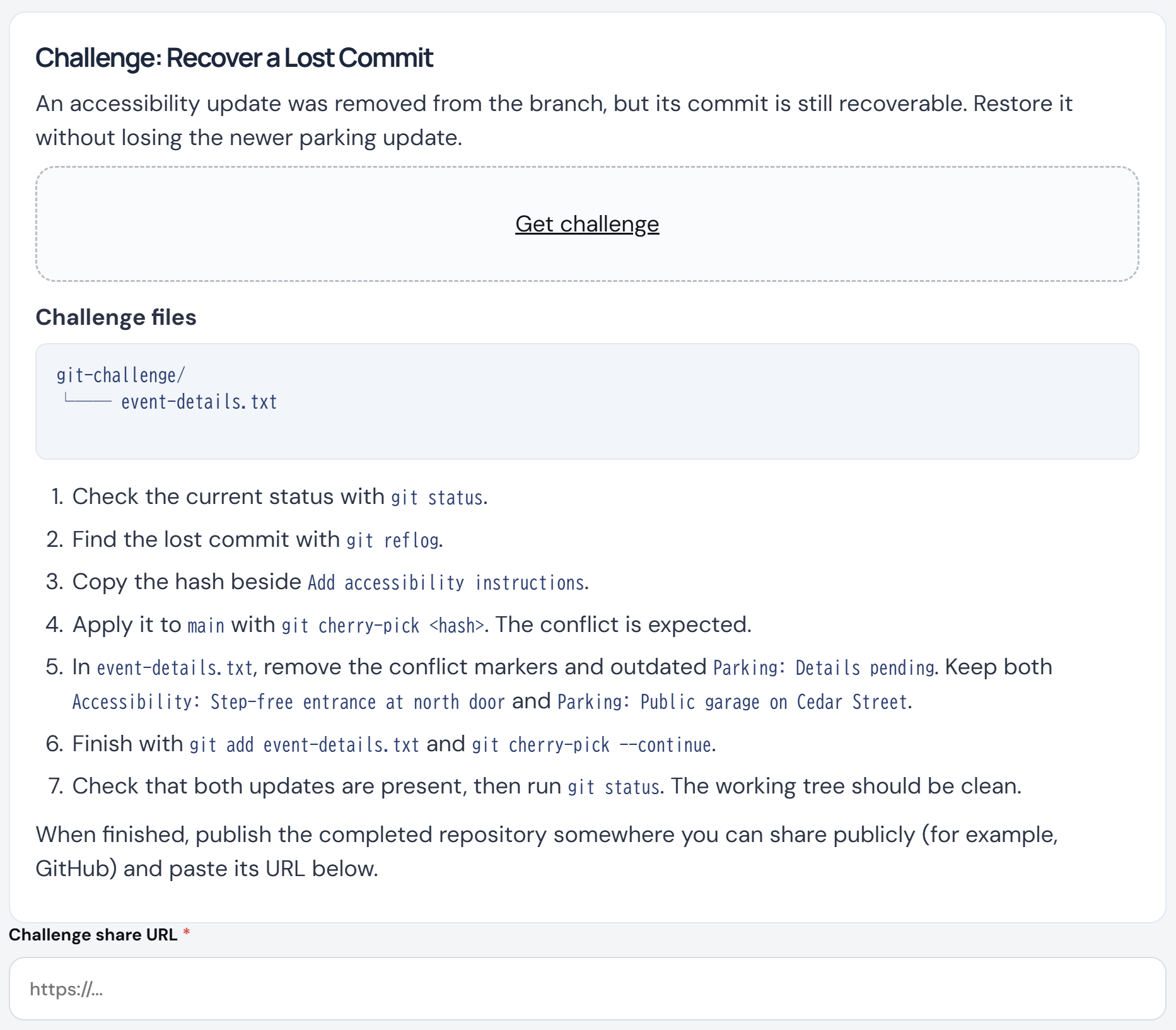
The zip file contains a text file and a .git directory. The instructions tell the applicant to execute Git commands such as git status or git reflog to recover a lost commit.

.git/config and .git/info/attributes, stored in the .git directory, contain the following configurations. They are related to Git clean filters that transform file contents when they are passed from the working tree to Git for staging or comparison. A filter can be configured to invoke an external command during this process.
The following .git/config defines a clean filter named ltr. The following .git/info/attributes specifies that this filter should be applied to the target files. As a result of this combination, .git/ltr is executed when Git converts the contents of target files.


Besides git add, the clean filter could also be invoked when git status checks for modifications to the target files. If an applicant follows the instructions and executes git status, the .git/ltr script containing malicious code could be executed. Since git status could also be executed by Git integrations in IDEs, the clean filter could be invoked without user interaction.
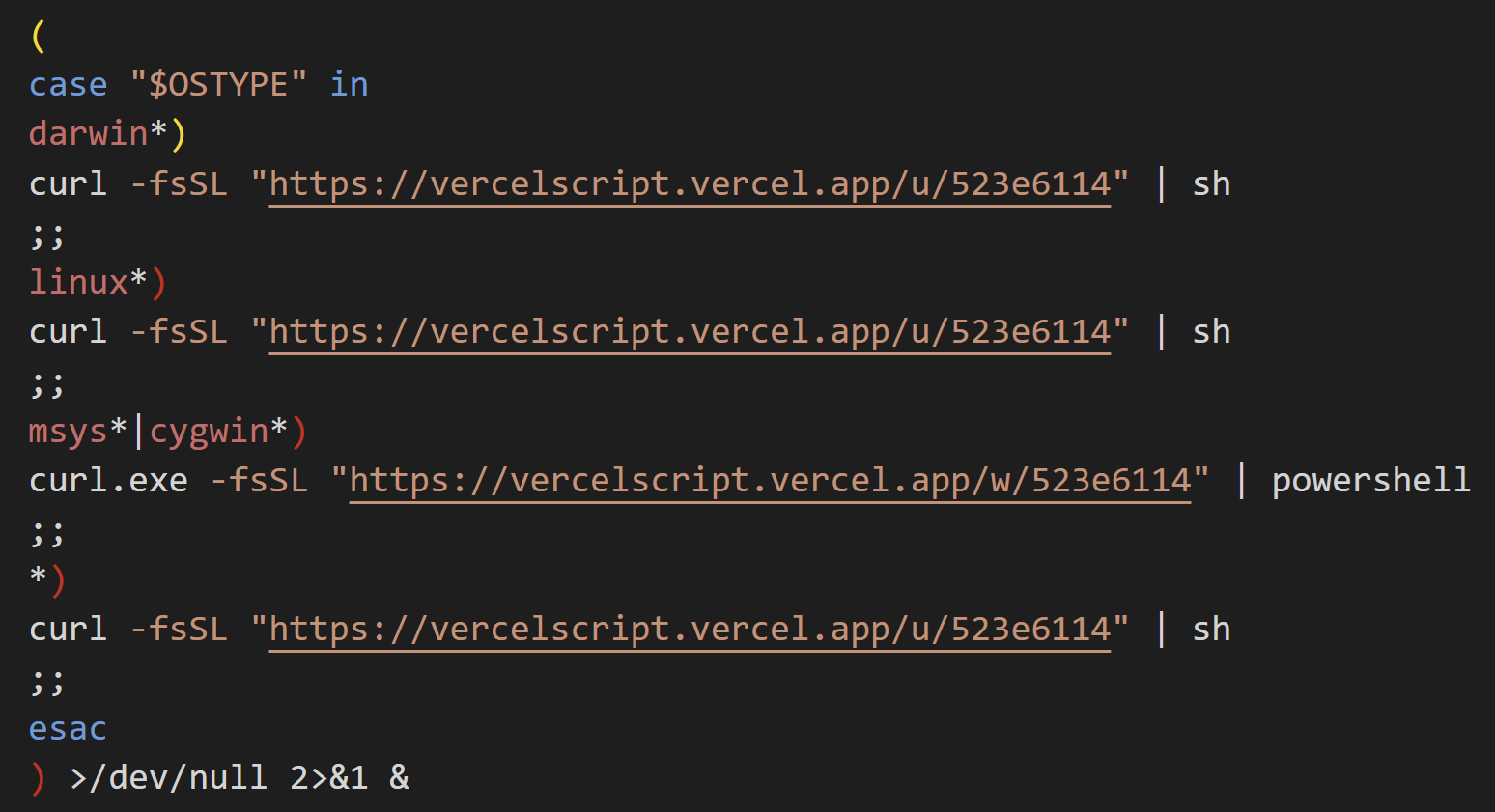
.git/ltr downloads and executes the version of OtterCandy that matches the execution environment. Although we confirmed that the downloaded OtterCandy v1.5.12 contains many new features, we do not go into detail here because they were already covered in our VB2026 presentation[2]. One notable change is the addition of functionality to execute NetSupport Manager as an additional payload, similar to OtterCookie v1.5.5.
Conclusion
In this article, we introduced attacks abusing Git clean filter by WaterPlum. In this attack, applicants are provided with a ZIP file containing a .git directory with malicious configuration files and scripts. The malicious script is executed when an applicant runs a Git command such as git status. If you receive an archive containing a .git directory from an untrusted source, carefully inspect the configuration and related files under .git before running any Git commands.
IoC
- script-six-tawny.vercel[.]app
- vercelscript.vercel[.]app
- gd-git-project.vercel[.]app
- vercelscript-1.vercel[.]app
参考文献
[1] NTT Security, "OtterCandy, malware used by WaterPlum", https://jp.security.ntt/insights_resources/tech_blog/ottercandy_malware_e/
[2] NTT Security, "Otter encyclopaedia: deep analysis of Otter family", https://virusbulletin.com/conference/vb2026/abstracts/otter-encyclopaedia-deep-analysis-otter-family/